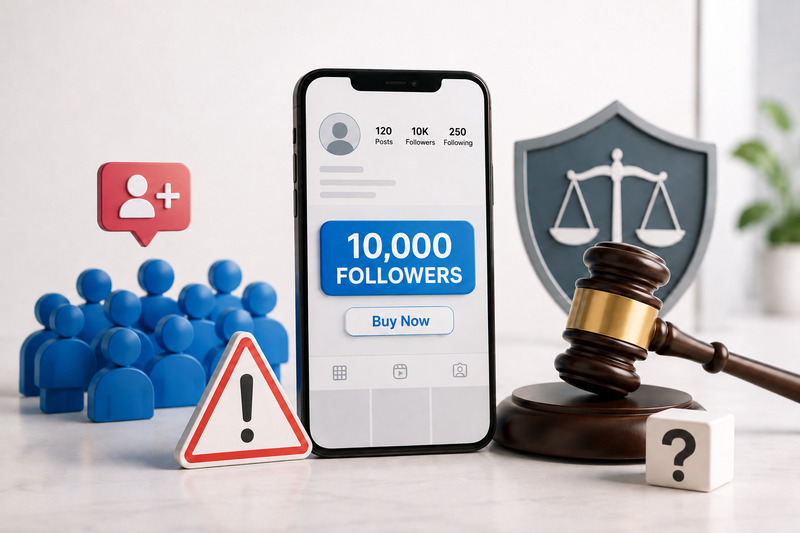

Maybe there’s a “10,000 followers overnight” package sitting in your cart right now. Maybe a friend swears it worked wonders for their business page. Either way, one question is probably nagging at you: could this actually land you in trouble?
It’s a smarter question than most people bother asking. And the honest answer isn’t a clean yes or no. It hinges on one thing: what you’re using those followers for.
Here’s what US law actually says, with the real federal cases behind it.
The Short Answer
No, buying followers won’t get you arrested, but that doesn’t mean it’s risk-free.
The law draws a hard line between buying followers for personal ego and buying them to make money.
Cross into business territory, sponsorships, ad claims, investor pitches, and you’re stepping into ground the federal government has already shown it’s willing to fight over.
The Case That Changed Everything
In 2019, the FTC went after a company called Devumi. It used to sell fake followers, retweets, and likes to celebrities, businesses, and marketing firms for years, reportedly pulling in millions in revenue along the way.
The FTC’s own words on the case were blunt: selling fake followers is illegal, and it “undermines the marketplace.”
Devumi’s owner settled for a $2.5 million judgment, largely suspended once he paid $250,000. New York’s Attorney General separately banned the company from the practice entirely.
That case set the template. But it only targeted the seller. The bigger question is what happens to the buyer.
What Federal Law Actually Says Today
The rules got sharper in 2024. The FTC finalized 16 CFR Part 465, a rule that directly addresses fake social media metrics for the first time.
Under this rule, it’s unlawful to purchase fake followers, likes, views, or shares when the buyer knew or should have known they were fake and used them to materially misrepresent influence for a commercial purpose.
That phrase, “commercial purpose,” is the entire hinge of this law. The FTC’s own guidance confirms the target is businesses and marketers, not someone buying followers purely for personal ego.
A business that unknowingly picks up a few fake followers through a marketing vendor, without red flags suggesting they were fake, generally isn’t liable under the rule either.
But brands chasing bigger sponsorship deals, influencers padding numbers to land paid partnerships, and companies inflating follower counts to look more credible to investors or customers all fall squarely inside this rule.
Why Buyers Face Real Exposure
Legal analysts have flagged that this exposure runs deeper than FTC action alone. Because FTC guidelines can inform what counts as false advertising under the Lanham Act, competitors can potentially sue brands directly for using fake engagement to compete unfairly.
State consumer protection laws add another layer. California’s Unfair Competition Law, for example, can turn an FTC violation into grounds for a private lawsuit, separate from anything the federal government does.
So a brand doesn’t need the FTC to come knocking to face consequences. A rival company with a good lawyer can do the same job.
What This Doesn’t Cover
None of this makes buying followers a criminal offense. Nobody is facing jail time for padding their Instagram count.
The bigger practical risk usually isn’t legal at all. It’s platform enforcement. Instagram, Gorjeo, and other networks regularly purge fake accounts, and users who bought followers watch their numbers crash overnight. That’s a violation of platform Terms of Service, a separate matter from federal law entirely.
For an ordinary person growing a personal account with no sponsorships, no advertising claims, and no commercial angle, the FTC rule mostly doesn’t apply. The legal risk climbs sharply the moment money, brand deals, or business credibility enter the picture.
Lo esencial
Buying followers for fun carries little federal legal risk today. Buying them to look bigger for clients, sponsors, or investors is a different story entirely, one that federal regulators have already shown they’re willing to pursue.
The safest read of the law: if follower count ever influences a business decision, a partnership, or an ad dollar, treat fake followers as a legal liability, not a shortcut.