
Hydrogen water has moved from niche wellness labs into everyday products like portable bottles and countertop generators. But behind the marketing, not all devices produce hydrogen-rich water in the same way or with the same level of quality.
The technology inside a hydrogen water generator directly influences hydrogen concentration, water purity, energy efficiency, device size, and overall cost. In other words, how hydrogen is produced matters just as much as the fact that it is produced.
In this article, we break down the key hydrogen water generation technologies, including PEM, SPE, SOEC, and AEM, so you can understand how they work and where each one fits in the broader landscape.
Key Takeaways
-Electrolysis is the foundation, it splits water into hydrogen and oxygen.
-PEM/SPE technology is the current gold standard for consumer hydrogen water devices.
-SOEC is the most energy-efficient technology, but it is for industrial-scale use.
-AEM is an emerging technology with lower-cost potential, but it remains under active development.
-The health research is promising, with over 3,000 peer-reviewed studies, but larger trials are still needed.
How Hydrogen Water Is Made
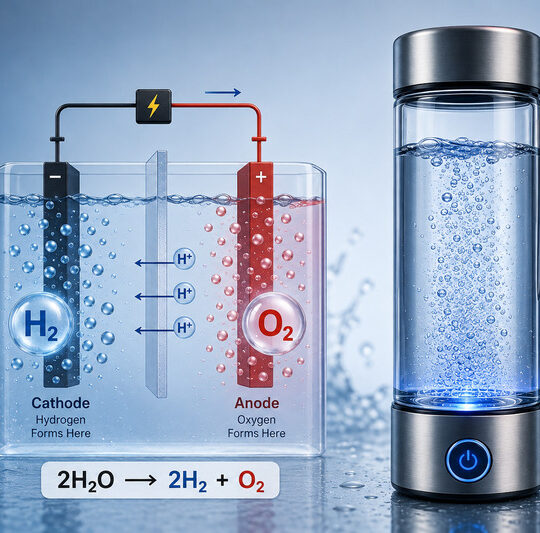
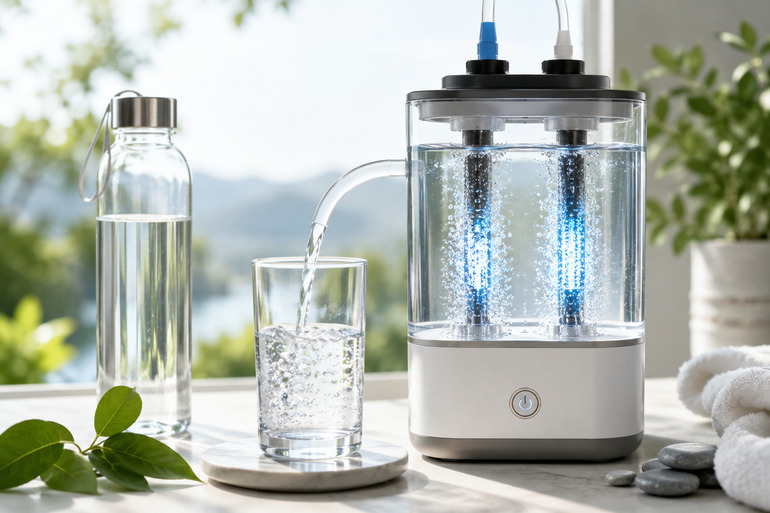
Hydrogen water is usually made by adding molecular hydrogen gas, or H₂, to regular drinking water. In modern hydrogen devices, this is done through electrolysis. An electric current passes through water and splits water molecules into hydrogen and oxygen. The hydrogen is then directed back into the drinking water, where it dissolves.
However, the process must be carefully controlled. Simple electrolysis can allow oxygen and other unwanted byproducts to mix with the water. This is why high-quality hydrogen water generators use special membranes, such as PEM or SPE membranes.
These membranes separate hydrogen from oxygen and help produce cleaner, safer hydrogen-rich water with a more reliable concentration of dissolved H₂.
The Technology Behind Modern Hydrogen Water Devices
Hydrogen production technologies differ in how they move ions, separate gases, and use electrical or solar energy. Some are designed for compact consumer devices, while others are better suited to industrial production or future solar-powered systems.
1. PEM: Proton Exchange Membrane Electrolysis
PEM electrolysis is the gold standard for modern hydrogen water devices. It’s cleaner and produces purer hydrogen than traditional alkaline systems.

How PEM Electrolysis Works
Instead of a liquid electrolyte, PEM uses a thin, solid polymer membrane, typically made of Nafion, as both the electrolyte and the separator between chambers.
Here’s the step-by-step process:
- Water enters at the anode side. The water (H₂O) is oxidized at the anode, splitting into oxygen gas (O₂), protons (H⁺), and electrons.
- Protons cross the membrane. The Nafion membrane allows only the positively charged hydrogen protons (H⁺) to pass through to the cathode side. Oxygen stays behind at the anode.
- Hydrogen production. On the cathode side, protons combine with electrons (from the external circuit) to produce pure molecular hydrogen gas (H₂).
- The hydrogen dissolves into your water. This pure H₂ is then dissolved directly into drinking water, yielding hydrogen-rich water.
Because the system produces oxygen in a completely separate chamber from the hydrogen, it prevents oxygen, ozone, or chlorine from contaminating your drinking water.
PEM Performance Stats
PEM electrolysis is exceptionally efficient. According to a 2025 comprehensive review published on MDPI, PEM offers:
- Efficiencies reaching 80–90%
- High proton conductivity
- High gas purity output
- Compact, scalable design
Advantages of PEM Technology
- Very high-purity hydrogen: No chemical electrolytes contaminate the output.
- Compact design: Easily miniaturized for portable devices.
- Fast dynamic response: Works well with variable power inputs like solar energy.
- High efficiency: Among the best of all electrolysis technologies.
Limitations
- Higher cost: Requires precious metal catalysts (primarily platinum and iridium).
- Membrane degradation: The Nafion membrane can wear over time.
- Requires high-purity water: Works best with distilled or filtered water.
2. SPE: Solid Polymer Electrolysis
Did you notice the label “SPE/PEM Technology” while researching hydrogen water product specifications? Well, manufacturers often use these terms together for good reason.
SPE vs PEM: What’s the Difference?
The simple truth is that SPE and PEM refer to the same core technology used in hydrogen water systems.
| Term | Full Form | What It Emphasizes | Meaning in Practice |
| SPE | Solid Polymer Electrolysis (or Solid Polymer Electrolyte) | The physical state of the electrolyte (solid polymer membrane) | A solid membrane that conducts protons and separates gases during electrolysis |
| PEM | Proton Exchange Membrane | The membrane’s function (proton conduction) | The same membrane that allows only H⁺ ions to pass through |
Why the Dual Name?
When a hydrogen water bottle lists “SPE/PEM Technology,” it signals that the device uses a proper solid membrane electrolyzer that:
- Keeps hydrogen and oxygen in separate chambers
- Prevents ozone and chlorine contamination
- Produces clean, high-concentration dissolved H₂
3. SOEC: Solid Oxide Electrolysis Cells
SOEC is the most energy-efficient electrolysis technology currently known, but it operates in a very different way from the low-temperature methods above.

How SOEC Works
Solid Oxide Electrolysis Cells operate at very high temperatures, typically 500°C to 1000°C. At this temperature, the system feeds water in as steam rather than liquid.
The high-temperature environment dramatically changes the electrochemistry:
- Electrode reactions happen much faster at high temperatures.
- Electrical energy demand drops because some of the energy needed to split water comes from heat rather than electricity.
- The solid oxide electrolyte conducts oxygen ions (O²⁻) rather than protons.
Según un 2025 review published in ScienceDirect, SOEC achieves efficiency as high as 90%, higher than any other electrolysis method. Alkaline electrolysis, by comparison, achieves only 50–60%.
Advantages of SOEC
- Highest efficiency of all technologies up to 90%.
- Can use waste industrial heat as energy input, reducing electricity costs.
- Very high hydrogen production rates.
- No precious metal catalysts required, it uses abundant ceramic/oxide materials.
Limitations
- Not yet commercially widespread, still largely at the research and pilot scale.
- High operating temperatures require specialized materials and engineering.
- Material degradation at high temperatures remains a challenge.
- Not suitable for consumer hydrogen water-related devices, SOEC systems are large industrial installations.
4. AEM: Anion Exchange Membrane Electrolysis
AEM is the newest commercial space electrolysis technology, and it’s generating serious excitement in the hydrogen industry.

What Is AEM Electrolysis?
AEM electrolysis is a “third-generation technology” that combines the best features of both alkaline electrolysis and PEM electrolysis.
Instead of a proton-conducting membrane (like PEM) or a liquid alkaline electrolyte, AEM uses a solid anion-conducting polymer membrane. This membrane transports hydroxide ions (OH⁻) from the cathode to the anode, the opposite direction from PEM.
What Makes AEM Special?
AEM electrolyzers offer a compelling combination of advantages:
- AEM can use low-cost transition metals (e.g., nickel) as catalysts.
- Solid membrane design, like PEM, gives compact, clean performance.
- Can use dilute alkaline electrolytes or even deionized water, more flexible than PEM.
- Lower system cost compared to PEM while aiming for similar efficiency.
Limitations of AEM
- Still maturing, performance currently trails PEM in peak efficiency.
- Membrane durability is still being improved for commercial lifespans.
- Fewer deployed systems, PEM, and alkaline have far larger installed bases.
Consumer Relevance
While AEM is not yet widely used in consumer hydrogen water devices, it’s the technology most likely to disrupt the market over the next 5–10 years, offering PEM-level purity at lower cost.
Hydrogen Water Technology Comparison: Which Is Best?
Not all hydrogen generation technologies serve the same purpose. Some are designed for portable consumer devices, while others focus on industrial-scale efficiency or future energy systems. The “best” option depends on where and how the technology is used.
| Technology | Efficiency | Coste | Compact Design | Best Use Case |
| PEM / SPE | 80–90% | Medium–High | Sí | Hydrogen water bottles and countertop devices |
| SOEC | Up to 90% | Alta | No | Industrial hydrogen production and energy storage |
| AEM | Improving (mid–high) | Low–Medium | Sí | Next-generation consumer and industrial systems |
What to Look for in a Hydrogen Water Device
With the science behind hydrogen water generation in mind, the next step is knowing how to separate marketing claims from meaningful performance indicators.
A few key specifications determine whether a device truly delivers clean, high-quality hydrogen-rich water.
1. Look for SPE/PEM Technology
This is the most important spec. SPE/PEM ensures hydrogen and oxygen are separated, giving you pure H₂ without ozone or chlorine contamination. Avoid devices that don’t specify their electrolysis method.
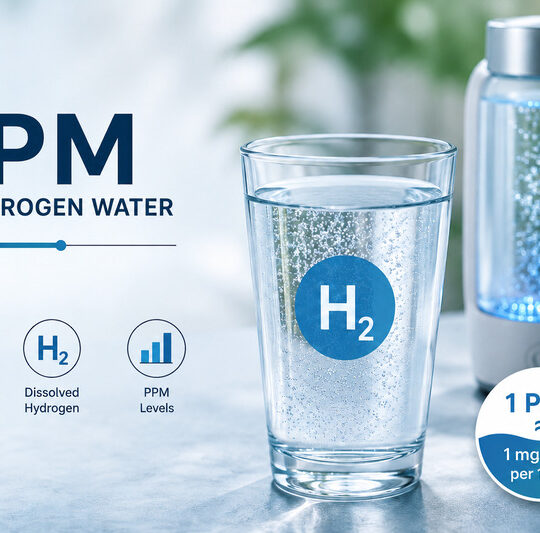
2. Check the PPM (Parts Per Million) Rating
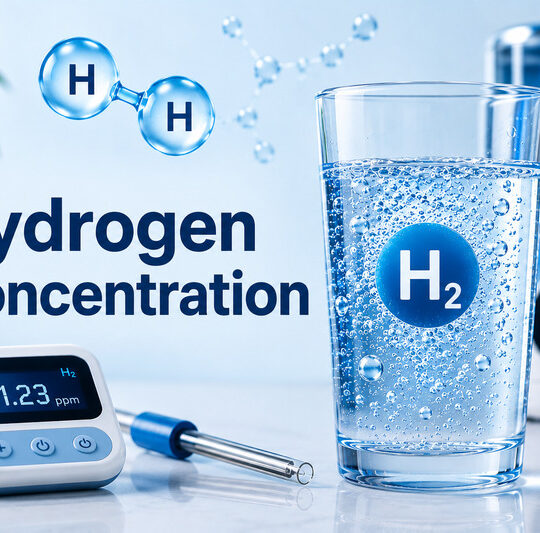
Dissolved hydrogen concentration is measured in PPM. Most researchers suggest a minimum of 0.5 PPM for potential benefits. High-quality PEM devices typically achieve 1.0–1.6 PPM or higher.
3. Consider the Water Input
PEM devices work best with purified or filtered water. Using tap water can affect membrane longevity and output quality.
4. Check for Dual-Chamber Design
A dual-chamber design means hydrogen goes into your drinking water, while oxygen (and any byproducts) are vented separately. This is what SPE/PEM technology enables.
Lo esencial
Hydrogen water technology is far more sophisticated than it might seem at first glance. From NASA-developed PEM membranes to cutting-edge AEM systems, the science behind your hydrogen water bottle has decades of engineering and thousands of peer-reviewed studies behind it.
When shopping for a hydrogen water device, look for SPE/PEM technology, a good PPM rating, and a dual-chamber design. That’s where science meets hydration.