
Shopping for sugar-free food can be more difficult than it seems. A package may say “sugar-free” in large letters, but that does not tell you everything about the product.
It may still contain carbohydrates, sugar alcohols, sweeteners, or ingredients that do not meet your needs. You also need to consider serving size, because eating more than one serving changes the nutrition totals.
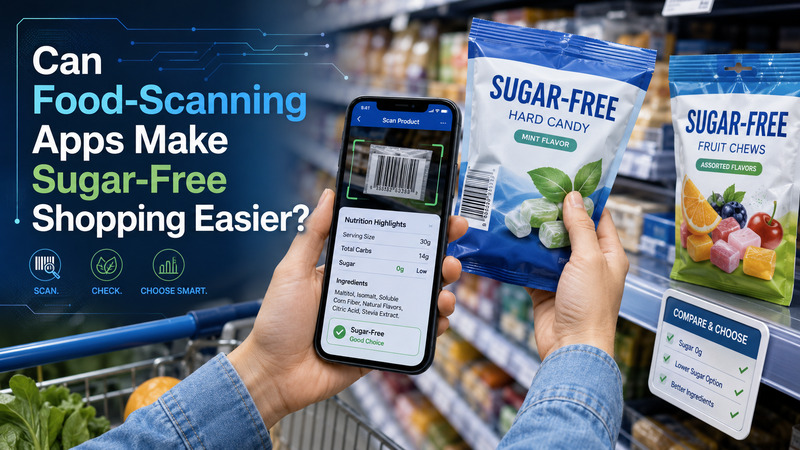
Food-scanning apps promise to make this process easier. By scanning a barcode with your phone, you can quickly view nutrition information and compare products. However, these apps are most useful when you understand what they can and cannot tell you.
How Do Food-Scanning Apps Work?
Most food-scanning apps use your phone’s camera to read the barcode on a package. The app then searches a food database and displays information connected to that product.
Depending on the app, this may include:
- Calories
- Total carbohydrates
- Total and added sugars
- Fiber
- Sugar alcohols
- Ingredients
- Serving size
- Allergens
- Nutrition scores
Some apps also let you save products, track meals, set nutrition goals, or compare similar foods. More advanced tools may use image recognition to identify food from a photograph.
This can save time in a busy store. Instead of studying several small labels, you can see the main details on your phone and compare two or three products more easily.
Why the “Sugar-Free” Label Is Not Enough
The words “sugar-free” can be useful, but they should not be the only reason you choose a product.
Selon la American Diabetes Association, a sugar-free product contains less than 0.5 grams of sugar per serving. However, it may still contain carbohydrates from other ingredients. It may also use sugar alcohols or other sweeteners to create a sweet taste.
This is why total carbohydrate and serving size are important. A product with no sugar can still provide a meaningful amount of carbohydrates, especially if you eat more than the listed serving.
Some apps highlight “net carbs.” This number is normally calculated by subtracting fiber and certain sugar alcohols from total carbohydrates. However, net-carbohydrate calculations are not always consistent, and different sugar alcohols may affect people differently.
For people managing diabetes, the American Diabetes Association recommends paying attention to total carbohydrates and monitoring individual responses.
How Apps Can Make Shopping Easier
A food-scanning app can be helpful in several practical ways.
1. Faster Product Comparisons
Suppose you are choosing between two sugar-free snack bars. Both packages make similar claims, but one has a smaller serving size and more total carbohydrates.
A scanning app can place the key numbers in an easier-to-read format. This helps you compare similar products without relying only on the marketing on the front of the package.
2. Easier Ingredient Checks
Sugar-free foods can contain sweeteners such as erythritol, xylitol, maltitol, stevia, monk fruit, sucralose, or allulose.
A scanner may help you find these ingredients quickly. This can be useful if you prefer a certain sweetener or know that another one causes digestive discomfort.
Still, the package should remain your final source. App databases may contain old or incorrect information, especially after a manufacturer changes a recipe.
3. Better Serving-Size Awareness
Serving size can be easy to miss. A small bag may contain two or three servings, even though many people would eat the whole bag at once.
A food-tracking app can calculate the nutrition totals for the amount you actually plan to eat. This provides a more realistic picture than looking at the numbers for one serving.
4. A Record of Products You Have Tried
Some apps let you save favorite foods or keep a meal history. Over time, this can help you remember which products suited your preferences and which ones did not.
People who monitor their glucose may also use their records to discuss food choices with a qualified healthcare professional.
What Food-Scanning Apps Cannot Do?
Food-scanning technology has limits.
First, a barcode result can be wrong. Databases may contain information added by users, outdated labels, or products with similar names. Always compare the app result with the package in your hand.
Second, an app cannot predict exactly how a food will affect an individual person. Nutrition data can support a decision, but it cannot replace glucose monitoring, personal experience, or medical advice.
Third, not every useful feature is free. Some apps require a paid subscription for barcode scanning, advanced tracking, or detailed nutrition reports.
Privacy is another consideration. Before creating an account, check what health, diet, and usage information the app collects and whether that data can be deleted.
A Simple Scanning Routine
The next time you shop for a sugar-free product, follow this process:
- Scan the barcode.
- Confirm that the product name and serving size are correct.
- Check total carbohydrates, not just total sugar.
- Review the ingredients and types of sweeteners.
- Calculate the nutrition totals for the amount you plan to eat.
- Compare the app information with the package label.
- Save the product only after confirming the details.
The Final Verdict
Food-scanning applications can make sugar-free shopping faster and more organized. They are especially useful for comparing products, checking serving sizes, reviewing ingredients, and keeping a record of previous choices.
However, they should be treated as shopping assistants rather than final authorities. The package label is still important, database information can be wrong, and individual needs can vary.
The best approach is to combine the speed of an app with careful label reading. Used together, these tools can help shoppers move beyond the words “sugar-free” and make more informed choices.
Disclaimer: This article is for general informational purposes and is not a substitute for professional medical or dietary advice.