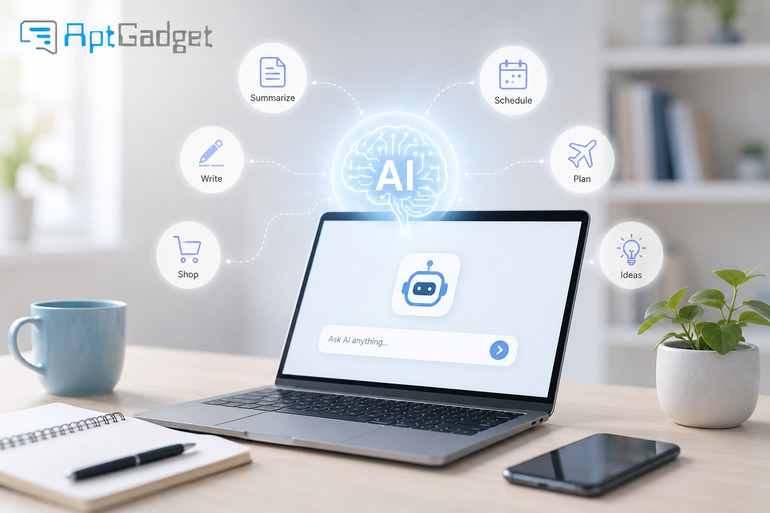

Artificial intelligence is becoming part of everyday life. Millions of people now use AI to write emails, summarize documents, plan trips, and answer everyday questions.
What was once considered an experimental technology is quickly becoming a routine digital tool. AI assistants are now available in smartphones, browsers, messaging apps, and productivity software, making them easier to access than ever.
Recent studies suggest this shift is accelerating. Consumers are no longer using AI only for work. Many are also turning to it for personal productivity, learning, shopping, and creative tasks.
AI Is Becoming Part of Everyday Routines
Buna göre Pew Research Center, searching for information is now one of the most common reasons people use AI chatbots. Many users also rely on YAPAY ZEKA to edit text, brainstorm ideas, and complete everyday tasks. About 49% of adults in the US are using chatbots to search for content, according to a survey conducted in 2026.
Microsoft’s 2025 Work Trend Index reached a similar conclusion. The report found that AI is becoming a regular part of how people work and manage information, rather than a tool used only for occasional experiments. About 46% of leaders say that their organizations are using AI agents to automate their work.
As organizations explore more advanced applications, teams can also start building AI agents for team collaboration to streamline shared workflows, coordinate tasks, and reduce repetitive work.
Instead of replacing human effort, most consumers use AI to save time. They often ask it to summarize articles, organize schedules, draft messages, or generate first ideas before making their own edits.
Convenience Is Fueling Adoption
The biggest reason for AI’s popularity is convenience.
People no longer need to open separate apps or websites. AI assistants are built directly into smartphones, search engines, web browsers, and office software.
Researchers studying millions of AI conversations found that writing, research, programming, and analysis remain the most common uses. The findings also suggest that most people use AI to support their work rather than completely automate it.
Industry analysts have noticed another trend. Consumers are increasingly asking AI about travel, health, shopping, recipes, and everyday decisions.
Privacy and Trust Still Matter
Growing adoption does not mean growing trust. Pew Research found that many consumers still worry about misinformation, privacy, and AI-generated errors. While usage continues to rise, confidence in the technology remains mixed.
Gallup reported similar findings in the workplace. Employees who already use AI are relying on it more often, but many workers have yet to adopt these tools. Almost 10-12% usage of AI is increasing day by day, according to a survey of 2025. Companies will likely need to improve transparency and reliability if they want AI adoption to continue growing.
AI has moved beyond being a novelty. For many consumers, it is becoming another everyday digital tool alongside search engines, smartphones, and cloud services.
Final Saying!
AI is steadily becoming a standard part of daily digital life rather than a niche technology. As these tools continue to improve and become more deeply integrated into everyday devices and services, consumer adoption is likely to grow.
At the same time, questions around accuracy, privacy, and transparency will remain central to how people choose to use AI in the years ahead.