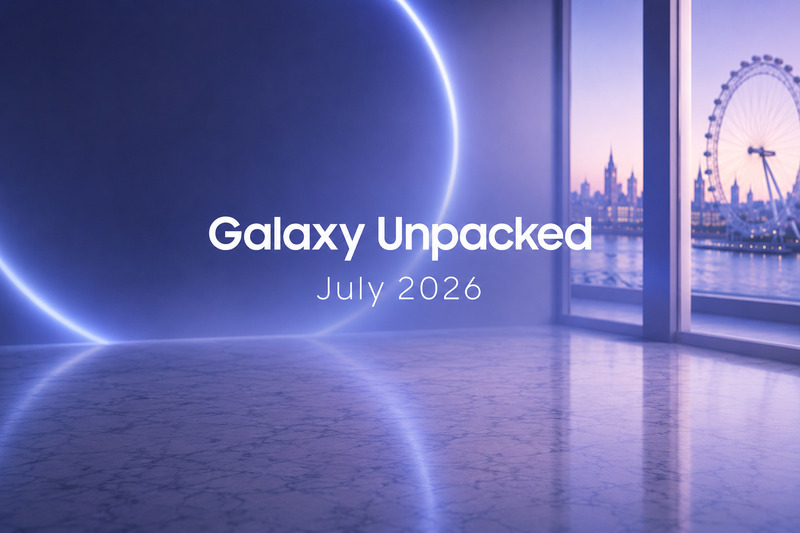

After months of leaks, teasers, and speculation, Samsung finally took the stage on July 22, 2026, and for the first time in 14 years, it did so in London rather than its usual U.S. venues. The message was clear from the opening minutes: this wasn’t a small, incremental update.
Samsung split its flagship foldable into two distinct phones for the first time, gave its smartwatches a chip overhaul, and used the event to tease what could be its next big product category, AI-powered smart glasses.
The event also highlighted Samsung’s strategy as competition in the foldable market continues to grow, with Chinese manufacturers pushing slimmer devices and Apple widely expected to introduce its first foldable iPhone in the near future.
Samsung Splits the Galaxy Z Fold Line for the First Time
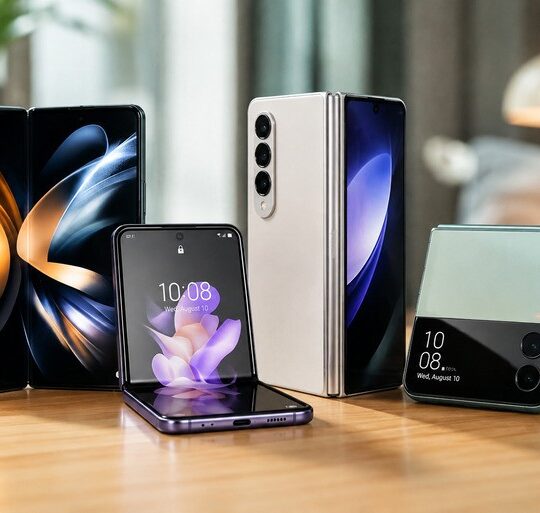
The biggest announcement of the event was Samsung’s redesigned foldable lineup. For the first time, Samsung is selling two distinct book-style foldables side by side rather than one flagship model:
- Galaxy Z Fold8
- Galaxy Z Fold8 Ultra
Galaxy Z Fold8

Samsung says the Galaxy Z Fold8 is its lightest Fold smartphone to date, weighing approximately 201 grams.
The redesigned device features a 7.6-inch main display alongside a 5.5-inch cover screen, creating a wider form factor that improves typing, reading, and multitasking while still offering a large display for gaming and media consumption.
Other highlights include:
- 4,800mAh battery
- 45W wired charging
- Dual 50MP wide and ultrawide cameras
- Snapdragon 8 Elite Gen 5 for Galaxy processor
- Lighter and more comfortable design than its predecessor
Samsung also introduced silicon-carbon battery technology to the Fold lineup for the first time. Compared with traditional lithium-ion batteries, silicon-carbon cells store more energy in the same physical space, allowing Samsung to increase battery capacity without making the phone thicker or heavier.
Galaxy Z Fold8 Ultra

Designed for power users, the Galaxy Z Fold8 Ultra brings Samsung’s most advanced foldable hardware yet.
According to Samsung, the Ultra features:
- 200MP main camera, matching the Galaxy S26 Ultra
- 5,000mAh silicon-carbon battery
- 45W fast charging
- Snapdragon 8 Elite Gen 5 for Galaxy processor
- New ArmorFlex hinge for improved durability
- Redesigned display that reduces the visibility of the centre crease
- Just 4.1mm thick when unfolded, making it Samsung’s thinnest Fold to date
The combination of a larger battery, thinner chassis, and flagship camera represents one of the most significant hardware upgrades Samsung has made to its Fold series in recent years.
Pricing and Availability
Samsung opened pre-orders immediately following the event, with general availability beginning in late July across major global markets.
Starting prices include:
- Galaxy Z Fold8: from $1,799
- Galaxy Z Fold8 Ultra: from $2,199
Prices vary by storage configuration and region.
Galaxy Watch9 and Galaxy Watch Ultra2
Samsung also refreshed its wearable lineup with two new smartwatches, both switching from Exynos to the Qualcomm Snapdragon Wear Elite chip for better power efficiency.
Galaxy Watch9

Starting at $379, the Galaxy Watch9 is available in 40mm and 44mm sizes.
New features include:
- Heart Health Score
- Daily Cardio Load
- Improved sleep analysis
- Faster app performance
- Better battery efficiency
Samsung continues expanding Galaxy AI’s role in health tracking, providing more personalised fitness recommendations and wellness insights throughout the day.
Galaxy Watch Ultra2

Priced from $699, the Galaxy Watch Ultra2 is designed for outdoor enthusiasts and endurance athletes.
Key upgrades include:
- 800mAh battery
- Brighter 5,000-nit display
- More internal storage
- Titanium construction
- Enhanced GPS and fitness tracking
Both watches ship with Wear OS 7 and One UI 9 Watch, adding AI-assisted coaching, improved sleep apnoea monitoring, and smarter workout recommendations.
Samsung Gives an Early Look at AI Smart Glasses

One of the event’s biggest surprises wasn’t a smartphone at all.
Samsung previewed its upcoming AI-powered smart glasses, developed in partnership with Google, Gentle Monster, and Warby Parker.
Although Samsung did not announce pricing or an exact release date, the glasses are expected to launch later in 2026.
Planned features include:
- Google Gemini integration
- Voice-controlled assistance
- Built-in camera
- Gesture controls
- Deep integration with Galaxy smartphones
The preview signals Samsung’s growing interest in wearable AI devices, a category that many analysts expect to become increasingly competitive over the next few years.
One UI 9 Expands Galaxy AI
Alongside the hardware, Samsung detailed One UI 9, based on Android 17, bringing features such as:
- My FanCam, which automatically tracks and reframes subjects in video
- Deeper Gemini integration across apps
- Improved cover-screen tools for foldables
- Smarter multitasking and productivity features
What Changed Compared With Last Year?
Compared with the previous Galaxy Fold generation, Samsung focused on meaningful refinements rather than dramatic redesigns.
Notable improvements include:
- A new two-model Fold lineup
- Silicon-carbon battery technology
- Thinner and lighter foldables
- Improved hinge durability
- More capable camera hardware
- Qualcomm’s latest wearable chipset
- Expanded Galaxy AI features across phones and watches
While the overall design language remains familiar, the cumulative upgrades address several long-standing criticisms of Samsung’s foldable devices, particularly battery life, weight, and durability.
Final Say
Galaxy Unpacked July 2026 wasn’t about reinventing Samsung’s ecosystem, it was about refining it. The Fold8 lineup brings real hardware upgrades, especially with its shift to silicon-carbon batteries.
The Watch series pushes deeper into AI-driven health tracking, and the smart glasses preview points to Samsung’s next big hardware bet. With Apple reportedly preparing its own foldable iPhone, Samsung’s timing here looks anything but accidental.