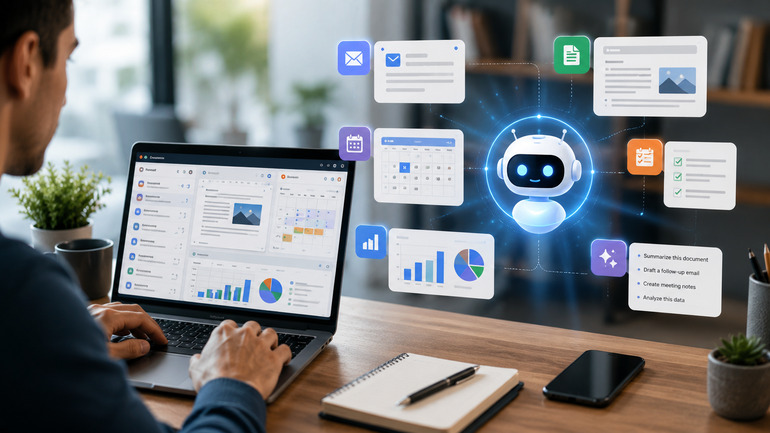

Artificial intelligence assistants are no longer niche tools used by tech enthusiasts. From workplaces and classrooms to personal devices, AI-powered assistants are becoming an increasingly common part of everyday productivity.
As major technology companies continue embedding AI into their software ecosystems, users are turning to these tools to draft content, summarize information, automate routine tasks, and manage growing workloads more efficiently.
The trend reflects a broader shift in how people interact with technology. With adoption accelerating across both businesses and consumers, AI assistants are quickly evolving from experimental features into essential digital companions.
AI Adoption Continues to Accelerate
The growing popularity of AI assistants is backed by increasing enterprise and consumer adoption. According to McKinsey & Company’s latest State of AI report, organizations across industries are expanding their use of generative AI, with productivity improvement emerging as one of the most common applications.
The report found that businesses are increasingly deploying AI tools to streamline workflows and reduce time spent on repetitive tasks. From customer service operations to content creation and data analysis, AI is becoming a standard part of digital work environments.
Major Technology Platforms Are Embedding AI Into Everyday Software
The rise of AI assistants is no longer limited to standalone applications. Major technology companies are integrating AI capabilities directly into software development.
Microsoft has expanded Copilot across its Microsoft 365 ecosystem, enabling users to generate presentations, summarize meetings, analyze spreadsheets, and draft documents using natural language prompts.
Google has similarly introduced AI-powered features throughout Workspace, helping users write emails, organize information, and automate administrative tasks.
This level of integration reflects a significant industry shift. Instead of requiring users to seek out dedicated AI platforms, companies are embedding AI assistance directly into existing workflows.
Productivity Benefits Are Driving Consumer Adoption
AI assistants have rapidly evolved from experimental tools into everyday productivity aids. Students use them to organize research and study materials, freelancers rely on them for content creation and client communication, and professionals use them to summarize documents, draft reports, and manage routine tasks.
Recent findings from Stanford University’s 2026 AI Index Report highlight how quickly these tools are gaining mainstream adoption. The report found that generative AI reached 53% population adoption within just three years, making it one of the fastest-adopted technologies in history. It also revealed that four out of five university students now use generative AI tools, underscoring their growing role in education and knowledge-based work.
The report further estimates that generative AI delivers $172 billion in annual value to U.S. consumers, while the median value users derive from these tools nearly tripled between 2025 and 2026. Together, these findings suggest that AI assistants are no longer viewed as experimental technology but as practical tools that help users save time, improve efficiency, and manage growing amounts of digital information.
Challenges Remain Despite Growing Adoption
While enthusiasm for AI assistants continues to grow, concerns surrounding accuracy, privacy, and data security remain important considerations. Organizations implementing AI tools are increasingly developing internal policies governing how employees can use AI-generated content and what information can be shared with these systems.
Industry analysts also caution that productivity gains depend heavily on how AI is used. Human review remains essential, particularly in professional environments where factual accuracy and compliance requirements are critical.
AI Is Becoming a Standard Feature Rather Than a Premium Add-On
Perhaps the most significant development is that AI assistants are increasingly becoming expected features rather than optional extras. According to Gartner, AI-powered assistants are expected to become standard components of workplace software, fundamentally changing how users interact with digital tools.
As software platforms continue expanding AI capabilities, the distinction between traditional productivity applications and AI-powered assistants is becoming less clear. The technology’s growing presence across workplace software, mobile applications, and consumer services suggests that AI assistants are no longer an emerging trend; they are becoming a routine part of everyday productivity.
Final Say!
The rapid adoption of AI assistants signals a broader shift in how people work, learn, and manage daily tasks. As organizations and consumers increasingly rely on AI to streamline workflows, automate repetitive processes, and improve efficiency, these tools are becoming a standard part of modern digital experiences.
While challenges related to accuracy, privacy, and responsible use remain, the technology’s continued integration into mainstream software suggests that AI assistants are evolving from optional productivity aids into essential workplace and personal productivity tools. The trend underscores how artificial intelligence is moving beyond experimentation and becoming a practical component of everyday computing.