

Hydrogen water has quickly moved from a niche scientific topic into a growing global wellness trend, appearing in conversations around hydration and modern health innovation. Yet despite its rising popularity, it remains widely misunderstood outside scientific and wellness communities.
Here, we explore what hydrogen water is, how it is made, how it works in the body, and why it is gaining popularity among biohackers and wellness enthusiasts.
We also examine its safety profile, common misconceptions, and the expanding ecosystem of hydrogen-based technologies shaping the future of functional hydration.
Quick Facts About Hydrogen Water
- Hydrogen water is regular water infused with dissolved molecular hydrogen gas (H₂).
- It is considered a functional hydration product, not a medical treatment.
- It is different from alkaline, mineral, or flavored water.
- Molecular hydrogen is colorless, tasteless, and does not change the taste of water.
- It contains zero calories and no macronutrients.
- It is produced using technologies like electrolysis, PEM, or SPE systems.
- Hydrogen gas can slowly escape over time if not properly sealed.
What Is Hydrogen Water?
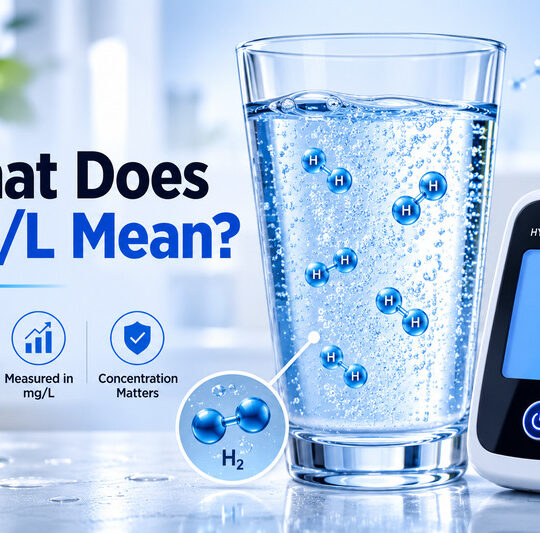
Hydrogen water, also known as hydrogen-rich water or hydrogen-infused water, is drinking water that contains additional molecular hydrogen gas (H₂).
While regular water already contains hydrogen as part of its chemical structure (H₂O), hydrogen water contains extra dissolved hydrogen molecules that exist independently within the water.
You can think of it this way:
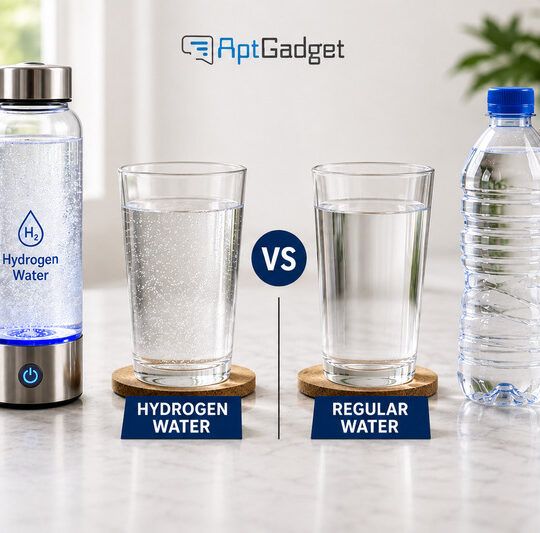
- Regular Water = H₂O
- Hydrogen Water = H₂O + Dissolved H₂ Gas
This extra molecular hydrogen is what makes hydrogen water different from conventional drinking water.
Hydrogen water should not be confused with:
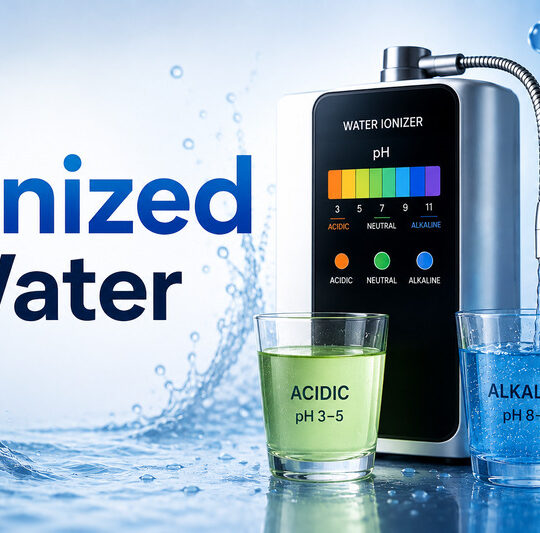
- Alkaline water
- Mineral water
- Flavored water
- Vitamin-enhanced water
Its primary characteristic is the presence of dissolved molecular hydrogen gas.
What Is Molecular Hydrogen?
Molecular hydrogen (H₂) is the smallest and lightest molecule in existence. It consists of two hydrogen atoms bonded together to form a stable gas.
The hydrogen atoms found in ordinary water are chemically bound to oxygen and cannot behave independently. In contrast, molecular hydrogen exists as a free dissolved gas within hydrogen water.
Because of its tiny molecular size, researchers have been interested in studying how molecular hydrogen moves through biological systems. This scientific interest has helped drive the growing popularity of hydrogen-based wellness products.
Hydrogen Water Technology: How It’s Made
Hydrogen water may look like regular water, but the difference lies in the technology used to infuse it with molecular hydrogen. The most common technologies include electrolysis, PEM technology, and SPE technology, each playing a role in improving hydrogen concentration and device efficiency

Electrolysis Method
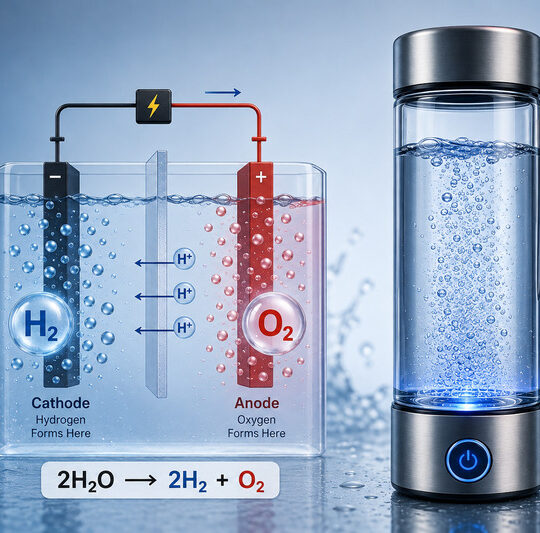
Electrolysis is one of the most common methods used to produce hydrogen water.
In this process, an electrical current passes through water and separates it into hydrogen and oxygen gases. The generated hydrogen gas is then infused back into the water, creating hydrogen-rich water.
Many portable hydrogen water bottles, countertop machines, and home hydrogen water generators use electrolysis technology because it is efficient, fast, and widely available.
PEM Technology
PEM stands for Proton Exchange Membrane.
This technology uses a special membrane during electrolysis to help separate hydrogen gas from oxygen and other unwanted byproducts. As a result, PEM technology can produce cleaner and higher-quality hydrogen-rich water.
PEM systems are often found in premium hydrogen water bottles and advanced hydrogen water machines because they support better gas separation and more consistent performance.
SPE Technology
SPE stands for Solid Polymer Electrolysis.
This is another advanced hydrogen-generation technology used in many modern hydrogen water devices. SPE technology helps generate hydrogen efficiently while allowing manufacturers to design compact, portable, and user-friendly products.
Because of its size and efficiency, SPE technology is commonly used in modern hydrogen water bottles that are designed to produce hydrogen-rich water quickly and conveniently.
Hydrogen Water Nutritional Profile (What It Contains)
Hydrogen water is not a source of traditional nutrients like vitamins, minerals, or macronutrients. Instead, its unique feature is the presence of additional dissolved Molecular Hydrogen.
From a nutritional standpoint, hydrogen water is best described as zero-calorie functional water rather than a nutrient-dense beverage.
It does not provide:
- Protein
- Fat
- Carbohydrates
- Vitamins
- Minerals (unless added separately)
Instead, its value lies in hydration support and the presence of dissolved hydrogen gas, which is the focus of ongoing scientific research within wellness and biohacking communities.
Hydrogen Water Nutritional Value Table
| Component | Hydrogen Water | Regular Water | Alkaline Water |
|---|---|---|---|
| Calories | 0 | 0 | 0 |
| Protein | 0 g | 0 g | 0 |
| Fat | 0 g | 0 g | 0 g |
| Carbohydrates | 0 g | 0 g | 0 g |
| Vitamins | Keine | Keine | Sometimes added |
| Minerals | None (unless added) | Trace (varies by source) | Often added |
| Molecular Hydrogen (H₂) | Yes (dissolved gas) | No | No |
| pH Level | Neutral (~7) | Neutral (~7) | Higher (alkaline) |
| Primary Function | Functional hydration + H₂ delivery | Basic hydration | pH-focused hydration |
Key Milestones in Hydrogen Water History
Although hydrogen water has gained mainstream attention only in recent years, scientific interest in molecular hydrogen dates back several decades.

The Hydrogen Discovery Era (1766–1987)
Long before hydrogen water became a wellness product, scientists were studying molecular hydrogen as the lightest element in the universe. Research focused on chemistry, physics, and specialized medical applications such as deep-sea diving.
The Scientific Foundation Era (1988–2006)
Studies began suggesting that hydrogen might play a biological role beyond being an inert gas. Researchers explored its interactions with oxidative stress and cellular processes, laying the groundwork for future investigations.
The Breakthrough Era (2007–2014)
The publication of a landmark Nature Medicine Studie in 2007 transformed hydrogen from a niche research topic into a growing field of medical and wellness research. Interest in hydrogen-rich water accelerated worldwide.
The Commercial Expansion Era (2015–2020)
As scientific publications increased, hydrogen water products entered mainstream wellness markets. Bottled hydrogen water, portable generators, and hydrogen tablets became increasingly accessible to consumers.
The Global Wellness Era (2021–Present)
Today, hydrogen water sits at the intersection of wellness technology, sports recovery, hydration innovation, and preventive health research. Scientists continue investigating its potential while businesses compete to develop more effective delivery systems.
What Happens to Hydrogen Water in the Human Body
When you drink hydrogen water, the dissolved hydrogen gas enters your digestive system and is quickly absorbed.
After absorption, it moves into the bloodstream and circulates throughout the body. From there, it can reach different tissues and cells.
Researchers studying molecular hydrogen primarily focus on its interactions with oxidative stress and fundamental cellular processes. This area of science is still developing, and findings continue to evolve.
Because hydrogen is the smallest molecule in nature, it can:
- Move easily through the digestive system
- Pass into the bloodstream quickly
- Reach different tissues in the body
- Spread into cells more easily than larger molecules
These properties are why hydrogen-rich water is still being studied in nutrition and wellness research.
Reasons Behind the Growing Popularity of Hydrogen Water
The growing popularity of hydrogen water is driven by a combination of scientific curiosity and increasing consumer interest in advanced hydration solutions.
While individual motivations vary, many people are drawn to hydrogen water because of its association with molecular hydrogen research and its potential role in supporting overall wellness.
Reasons people are choosing hydrogen water:
- Better daily hydration experience – Many users see hydrogen water as an enhanced form of hydration. It is often chosen by people who want more than basic water intake and are looking for a “functional hydration” option as part of their lifestyle.
- Fitness and athletic recovery – Hydrogen water is widely discussed among athletes and fitness enthusiasts. It is often included in recovery routines, especially after workouts, where hydration and physical recovery are a priority.
- Energy and fatigue support interest – Some consumers explore hydrogen water because of ongoing conversations around energy levels, fatigue, and daily performance. It has become part of broader wellness routines focused on maintaining consistent energy throughout the day.
- Biohacking and longevity trends – Hydrogen water has also gained popularity in the biohacking and longevity community. These users are typically interested in emerging wellness technologies and long-term health optimization strategies.
- Growing Scientific Curiosity: Interest has increased as researchers continue studying molecular hydrogen and its interaction with biological processes such as oxidative stress and cellular function. Although research is still evolving, this scientific attention has helped drive public curiosity.
What Hydrogen Water Is NOT!
As hydrogen water continues to gain attention in the wellness space, it is just as important to understand what it is not. Clear expectations help consumers avoid confusion and separate scientific facts from exaggerated claims.
Hydrogen water is NOT:
- a medicine
- a pharmaceutical treatment
- the same as hydrogen peroxide
- a cure for disease
- a replacement for medical care
Hydrogen water should be viewed as a functional hydration product within the broader wellness and nutrition space. While research on molecular hydrogen is ongoing, it is not positioned as a medical treatment or cure.
Common Misconceptions About Hydrogen Water
“It’s Just Marketing Hype”
Although marketing has increased its visibility, hydrogen water is not purely a trend. Ongoing studies on molecular hydrogen continue to explore its potential biological effects and mechanisms.
“It’s the Same as Alkaline Water”
Hydrogen water and alkaline water are not the same. Hydrogen water contains dissolved molecular hydrogen, while alkaline water focuses on pH levels. They are produced differently and work through entirely different properties and mechanisms in the body.
“Visible Bubbles Mean Better Hydrogen Water”
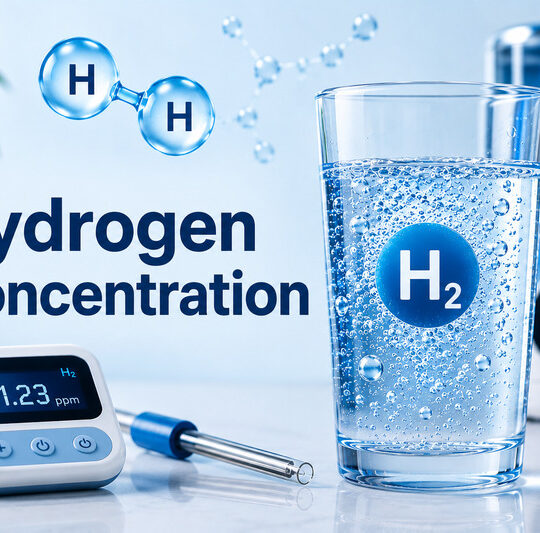
This is a misconception. Visible bubbles do not indicate higher hydrogen concentration. Hydrogen content depends on production method, pressure, and how well the gas is retained in the water, not on how many bubbles are visible after opening or pouring.
“More Hydrogen Means Stronger Effects”
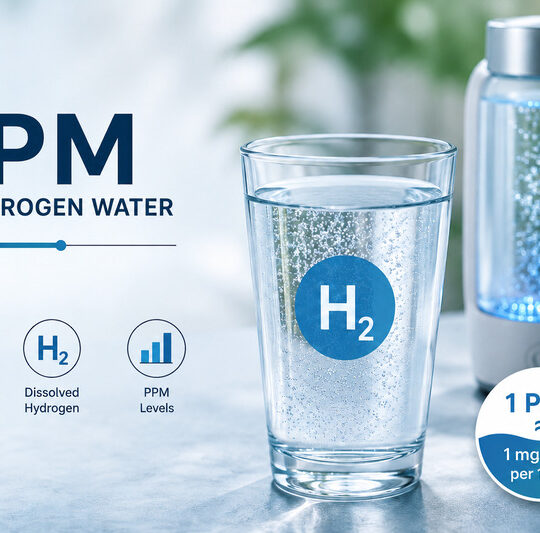
Hydrogen concentration does not directly translate to stronger or guaranteed effects. The body’s response depends on multiple biological factors, and research is still ongoing to understand optimal intake levels.
“Hydrogen Water Stays Active Indefinitely”
Hydrogen gas is very light and can escape over time. If not stored properly in sealed containers, hydrogen levels can gradually decrease, which is why packaging and storage matter.
Is Hydrogen Water Safe? What Current Research Shows
Hydrogen water is generally considered safe for human consumption. Molecular hydrogen is naturally occurring, and current scientific literature has not identified significant toxicity concerns associated with drinking water containing dissolved hydrogen gas.
Several published reviews support the safety profile of molecular hydrogen. A comprehensive review published in Medical Gas Research reported that hydrogen administration, including hydrogen-rich water, has demonstrated a strong safety record across both animal and human studies, with no major adverse effects identified.
Another review published in Frontiers in Nutrition concluded that molecular hydrogen appears to be well-tolerated and safe for human use. However, researchers emphasized the need for additional large-scale clinical trials.
Similarly, a review available through the National Library of Medicine found that molecular hydrogen has shown a favorable safety profile in existing studies and highlighted its growing use in wellness and clinical research.
While the current body of evidence is encouraging, researchers continue to emphasize the importance of larger and longer-term human studies to better understand potential applications and long-term outcomes.
As with any consumer product, the overall quality and safety of hydrogen water also depend on manufacturing standards, device materials, and proper usage. Consumers should purchase hydrogen water products from reputable manufacturers that follow recognized quality and safety standards.
Hydrogen Water and the Expanding Hydrogen Wellness Technology Ecosystem
Hydrogen water is one of the most widely recognized applications of molecular hydrogen, but it represents only a small part of a much broader and rapidly evolving wellness technology ecosystem. As interest in hydrogen-based solutions grows, manufacturers have developed multiple ways to deliver molecular hydrogen for different use cases and lifestyles.
Hydrogen Water Bottles
Portable devices that generate hydrogen-rich water on demand. These are commonly used for everyday hydration and travel-friendly convenience.
Hydrogen Tablets
Effervescent tablets that release molecular hydrogen when dissolved in water. They offer a simple, portable alternative without requiring electronic devices.
Hydrogen Water Machines
Countertop systems designed to produce larger volumes of hydrogen-rich water for regular home use. These are often used by households or wellness-focused individuals.
Hydrogen Inhalation Systems
Devices that deliver molecular hydrogen gas through inhalation rather than drinking water. These systems are distinct from hydrogen water and are used in different wellness contexts.
Hydrogen Bath Systems (emerging technology)
Hydrogen-infused bathing systems are designed to introduce molecular hydrogen through skin exposure during bathing. This category is still developing and varies widely in design and application.
Hydrogen Functional Drink Mixes
A growing category of powdered or sachet-based products that combine molecular hydrogen with functional ingredients such as prebiotics, electrolytes, or antioxidants. These mixes are designed to dissolve in water, offering a portable wellness hydration option.
Die Quintessenz
Hydrogen water is best understood as water infused with dissolved molecular hydrogen gas (H₂), not as a miracle product or a replacement for traditional healthcare. Its growing popularity stems from increasing scientific interest in molecular hydrogen and the development of innovative hydration technologies.
As research continues to evolve, hydrogen water remains a fascinating area of study and a rapidly expanding segment of the wellness industry.